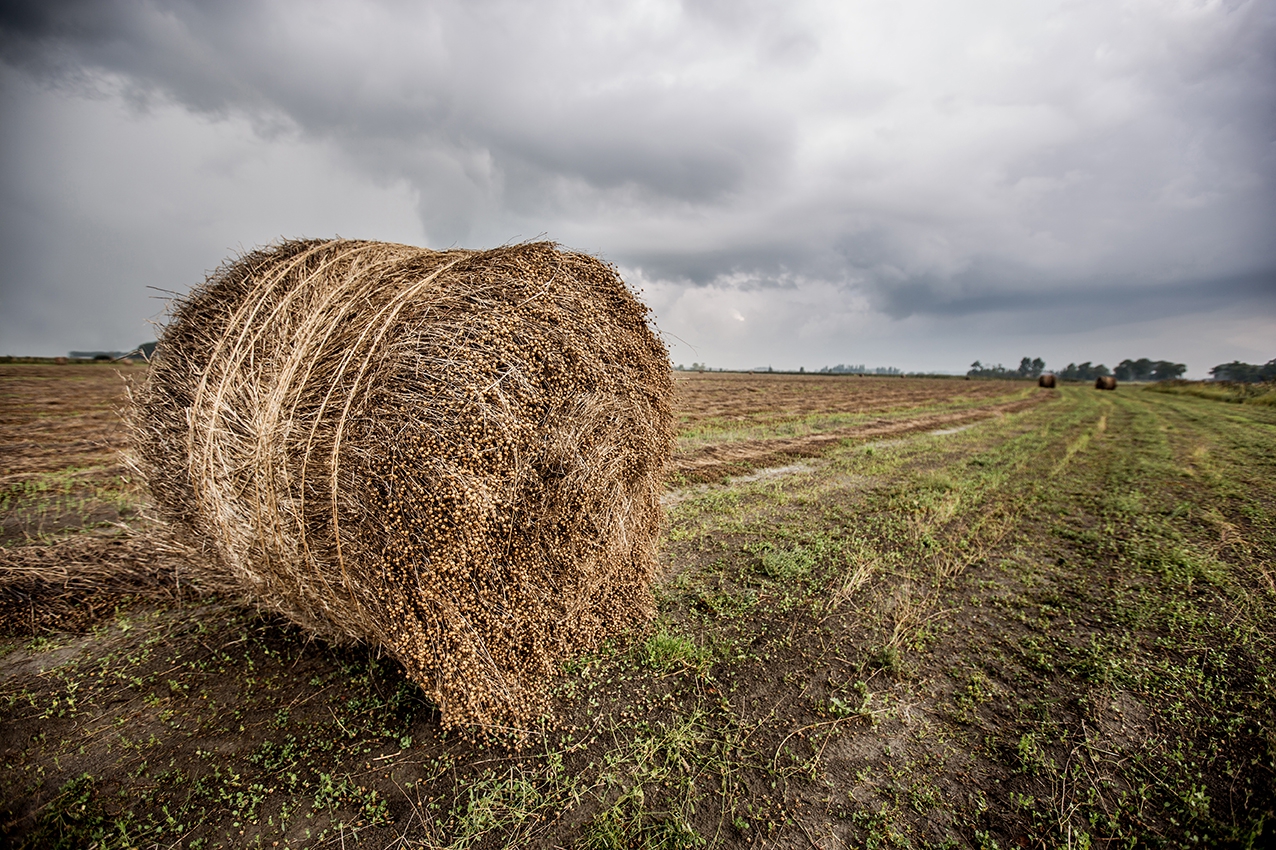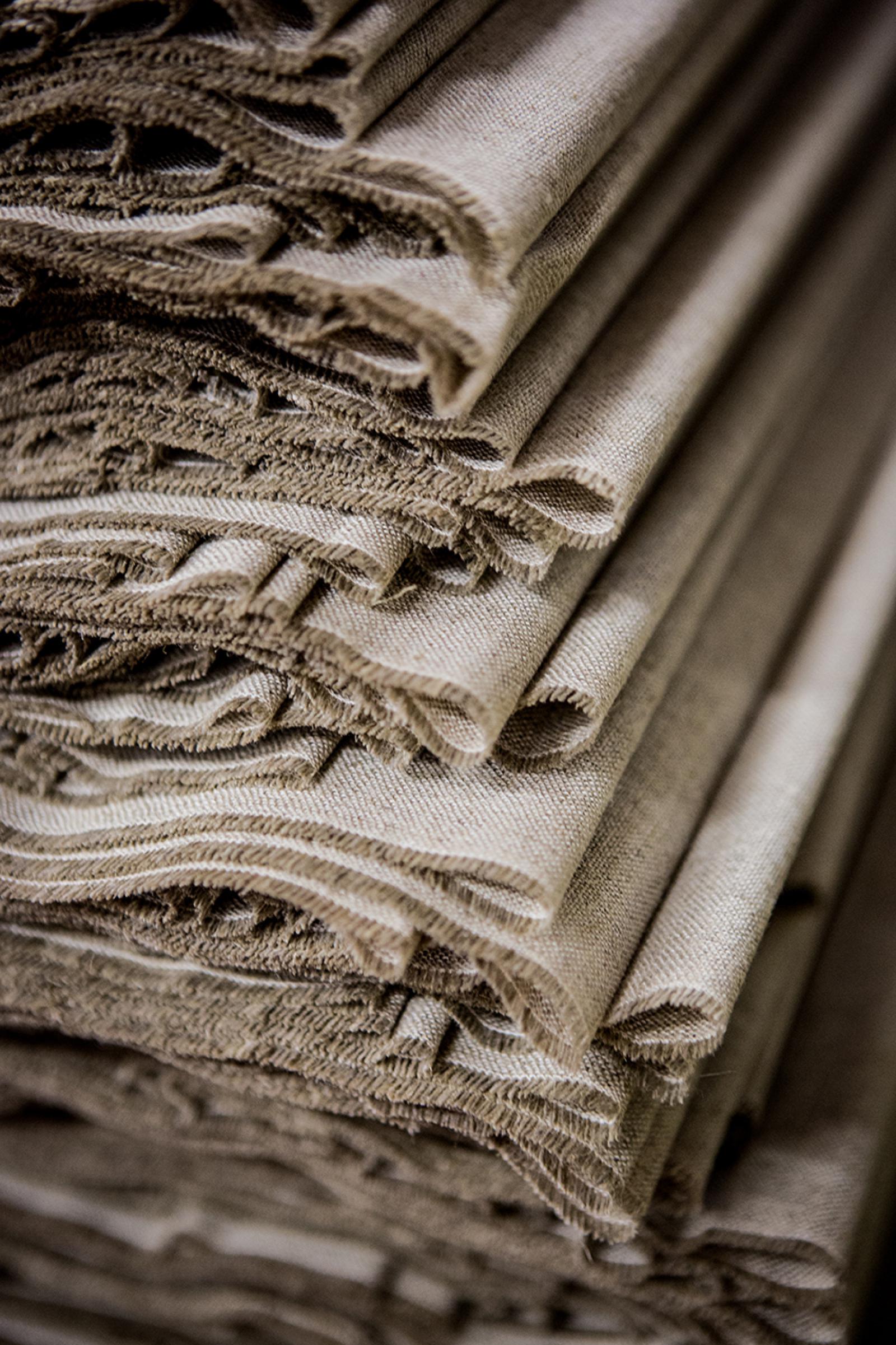
Flax has been farmed and linen fabrics woven in Flanders for centuries. By the 18th century, Meulebeke, situated near Kortrijk, had emerged as one of the villages with the largest linen production. By the 1800's, there were dozens of weaving firms operating in and around Meulebeke. Of these, only two remained: Libeco and Lagae Linens.
The first information on
Libeco dates from 1864. At that time, the company
was a collecting point and warehouse for pure linen fabrics
produced in the homes of the cottage workforce of the region. From
this first warehouse, the woven goods were transported by handcart
to Kortrijk, where they were dyed and sold. By 1904, a production
facility had been established and the factory had begun to install
power looms; by the end of the first World War, 140 looms were in
operation. Fine quality, pure linen fabrics and linen-cotton blends
were produced for sheets and table coverings. Even then, exports
were important to the firm, especially to South America. World War
II heralded a difficult period for the company but by the early
1960's, Libeco's shareholders adopted an ambitious investment plan
to ensure stability and allow the firm to grow once more.
Established in Kortrijk
in 1858, Lagae Linens produced fine cambric and
handkerchiefs. With their takeover of Tissages de Gryze in
Meulebeke, the Lagae brothers began to actively merchandise their
expanded weaving production. Despite partial destruction of their
weaving workshops in 1940, production facilities at Lagae Linens
have been rebuilt and continually expanded over the years resulting
in a firm with very modern production equipment. At the time of
their merger with Libeco, the firm was equipped with the latest
Sülzer-Rüti projectile and rapier weaving machines.
These venerable and uniquely complementary weaving firms merged on June 2, 1997, into a single company known simply as Libeco·Lagae. The strength and synergy realized by this friendly merger ensures that the age-old craft of Belgian linen weaving heads into the new millennium stronger than ever.
Libeco Home and the manufacturing of finished products has always been part of the activities. Between 1864 and 1950 mostly focussed on the production of very fine handkerchiefs, table linen ,bed linen and towels. In the sixties and the seventies the company increased the range to prints and yarn dyes. Since 1980 the division became more and more active in promoting a complete concept of linen for the home. Today it is one of the most creative lines on the contemporary market for household linens.
Libeco-Lagae Inc was founded in 1993 in New York City. It was set up as a sales office for servicing the apparel market in the States. In 1997 the company acquired the decorative division of Hamilton Adams and merged the two activities. Today the company is our main sales office for the US-market.
Libeco Home Stores NV was founded in 1986 under the name The Linen House. A first store was opened in Bruges as an experiment in retail. Over the years new stores were opened and the "linen concept " was developed further. Today we operate 2 stores: Tokyo & Meulebeke.
Van Acker NV is part of the group since 2002; this small firm had a very long history in the manufacturing of very high end linen and was a perfect addition to improve and offer a flexible customer production. To learn more about this company, visit their website.
Verlimas NV was founded in 1920 as "Blanchisserie de Courtrai" and is the expert for dyeing and finishing of linen and is part of the group since october 2007.
Lineo, founded in 2006, is a young and innovative company specialized in the use of flax as a reinforcement in composite products. Lineo wants to offer with the use of flax an alternative to the use of polluting and non-degradable fibers in composite structures. We are part owner since July 2008.
sitemap © Libeco